Men's wardrobe essentials: the pieces that do the most work
A practical guide to men's wardrobe essentials, with the core pieces, colours that combine easily, how things should fit, outfit formulas and what to skip.
A good wardrobe isn’t a big one. It’s a set of pieces that fit well, go together and suit how you actually live. Get the essentials right and getting dressed becomes quick, and you’ll look sharper with less effort.
This guide covers the core pieces, the colours to build around, how things should fit, and a few easy ways to combine them.
Start with your week
Before buying anything, think about how you spend your time. An office worker, a remote worker and someone who’s on their feet all day need different things. Make a rough split of your week:
- Work, and how formal it is
- Weekends and time at home
- Evenings out
- Sport or outdoor activity
- Occasional formal events
Then make sure your essentials match those proportions. There’s little point owning three suits if you wear one twice a year, and too few casual clothes for every Saturday.
The core pieces
These cover most situations for most men. Adapt the list to your climate and lifestyle.
Tops
- Plain T-shirts in white, grey, navy and black. Look for a fabric with some weight, so they hold their shape.
- Oxford shirts in white and light blue. Smart enough with a blazer, relaxed enough with jeans.
- A knit polo or two. Neater than a T-shirt, more relaxed than a shirt.
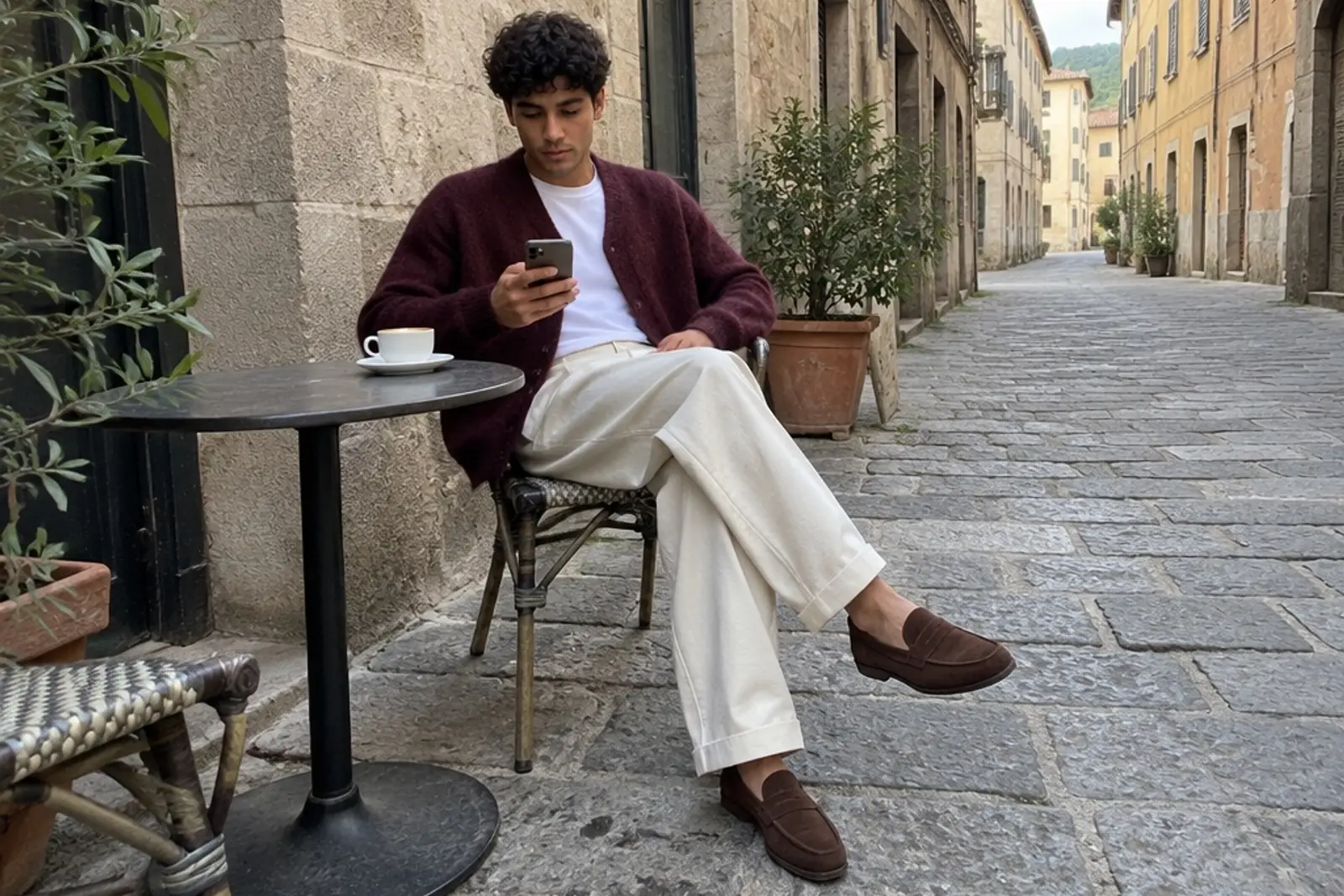
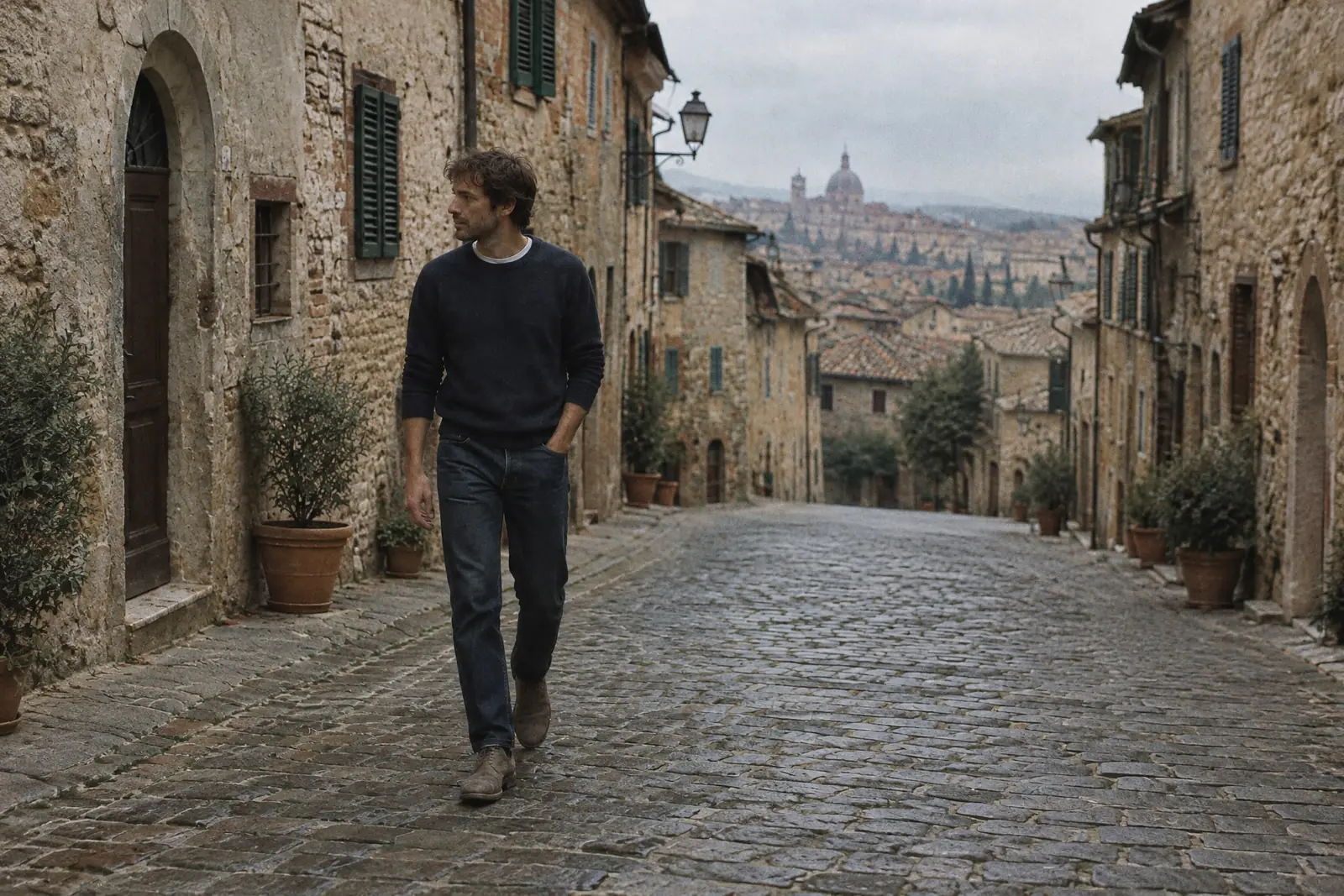
- Knitwear: a crew-neck jumper in navy or grey, and perhaps a cardigan or quarter-zip.
- An overshirt in a sturdy fabric, useful as a light layer.
Trousers
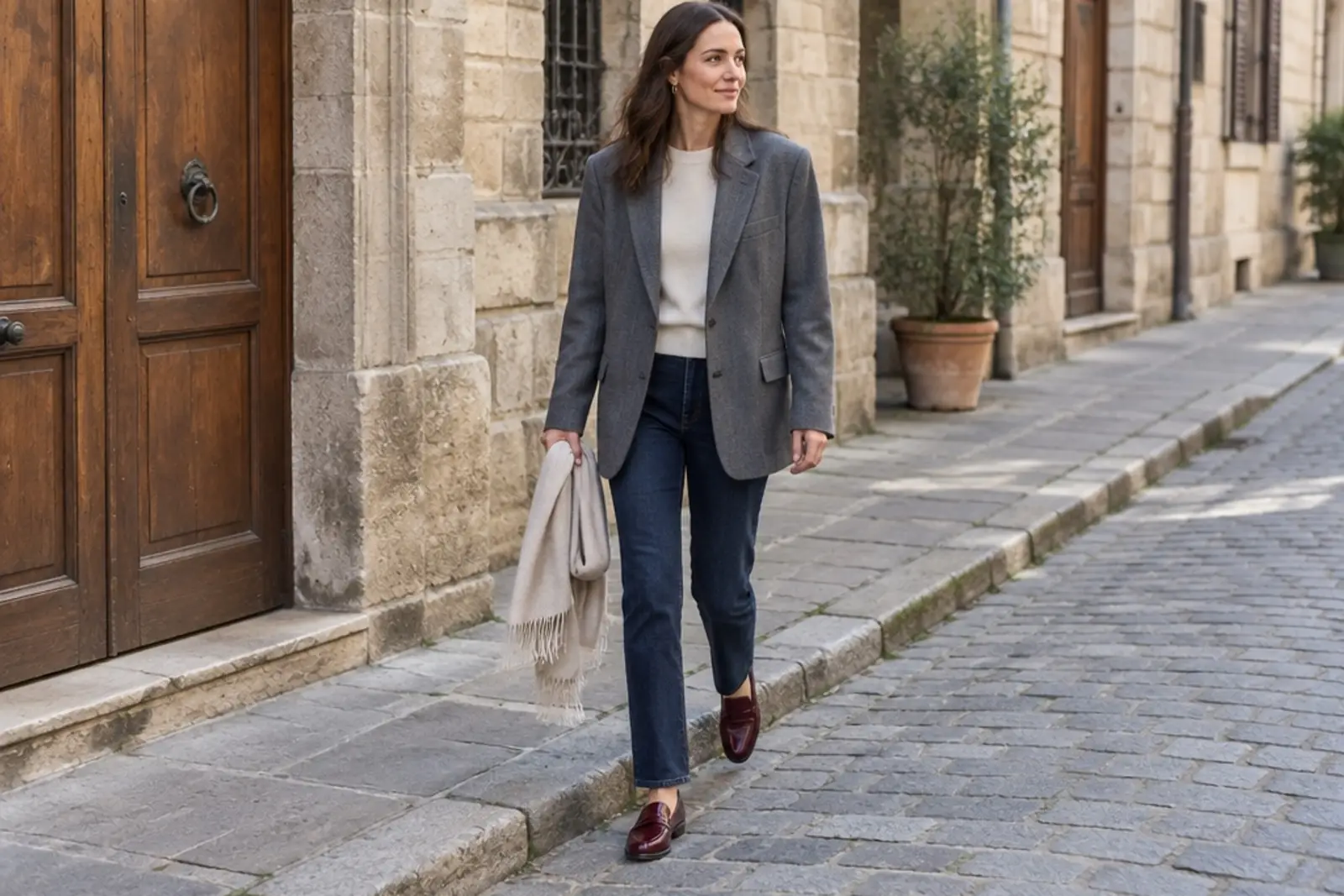
- Dark jeans in a straight or slim-straight cut, without heavy distressing.
- Chinos in navy, stone or olive.
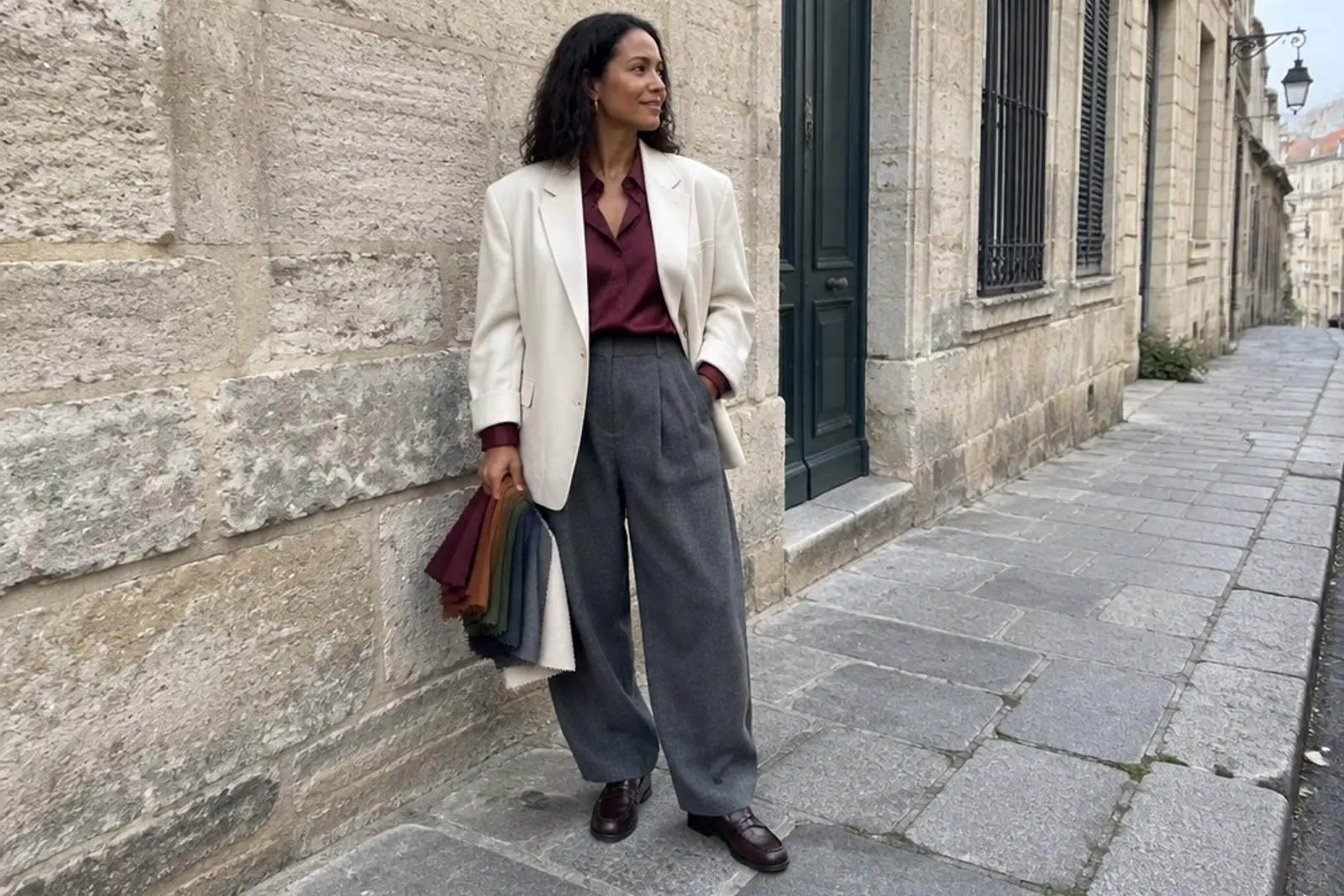
- Tailored trousers in grey or navy, for smarter days.
- Shorts if your climate calls for them: chino-style in a neutral colour.
Layers and outerwear
- An unstructured blazer in navy, which pairs with jeans, chinos and grey trousers.
- A casual jacket, such as a field jacket, bomber, denim or suede jacket.
- A good coat: a wool overcoat or a smart mac, depending on your climate.
Shoes
- Clean, minimal trainers in white or another neutral.
- Leather shoes or loafers in brown or black.
- Boots, such as chelsea or desert boots.
Occasion
- A suit in navy or charcoal, if your life involves weddings, interviews or formal work events. See our guide to what to wear to a job interview for more.
Colours that work together
The simplest approach is a base of neutrals with a few accents:
- Base colours: navy, grey, white, stone, olive and black or brown
- Accents: a few colours that suit you, like burgundy, forest green, rust or soft blue
Navy is especially useful because it works with almost everything else on the list. Denim works like a neutral, too. If most of your pieces sit within this palette, nearly any top will go with any trousers. Our guide to colour combinations that work explains a few simple formulas.
Fit comes first
A well-fitting T-shirt and jeans will always look better than an expensive outfit that doesn’t fit. A few checks:
- Shoulders: shirt and jacket seams should sit at the edge of your shoulders.
- Shirts: no pulling across the chest; sleeves end at the wrist.
- Trousers: sit at your waist without a belt doing all the work; length sits on the top of your shoe or just above.
- T-shirts: sleeves end around mid-bicep; the hem sits around the top of your trouser pocket.
Fit is personal, and the right cut depends on your build and what feels comfortable. Our guide to how clothes should fit goes into detail, including when tailoring is worth it.
Easy outfit formulas
Once you have the essentials, outfits almost assemble themselves:
- Everyday casual: dark jeans, white T-shirt, overshirt, white trainers
- Smart casual: chinos, oxford shirt, navy blazer, loafers
- Cooler days: grey trousers, navy crew-neck, overcoat, boots
- Evening out: black or dark jeans, knit polo, suede jacket, chelsea boots
- Warm weather: stone shorts or chinos, linen shirt, minimal trainers
Swap one piece at a time and you’ll find dozens of combinations from a small set of clothes. That’s the idea behind a capsule wardrobe.
What to skip
It’s easy to fill a wardrobe with things that rarely get worn. Pieces to think twice about:
- Very trend-led items that only go with one other thing you own
- Loud graphics and big logos, which are hard to combine and date quickly
- Duplicates of things you already own and rarely wear
- Anything that doesn’t fit, even if it was a bargain
- Formalwear for one-off events, which can often be borrowed or hired instead
When something new comes in, ask whether it works with at least three things you already own.
Small details that add polish
- A simple watch or a single piece of jewellery
- A belt that matches your shoes
- Socks that either match your trousers or add a small dose of colour
- Clean shoes, pressed shirts and a regular haircut
Our post on looking put-together with minimal effort has more on these everyday habits.
Seeing what you actually wear
Most men wear a small share of what they own on repeat. Amalook lets you photograph your wardrobe so it’s all in one place, plan outfits on a calendar, and see colour and style insights about what you actually reach for. It’s a simple way to spot the gaps in your essentials, and the pieces that are just taking up space.