Fit is everything: how clothes should fit you
How shirts, trousers, jackets and dresses should fit, quick checks you can do in the fitting room, and when a trip to the tailor is worth the money.
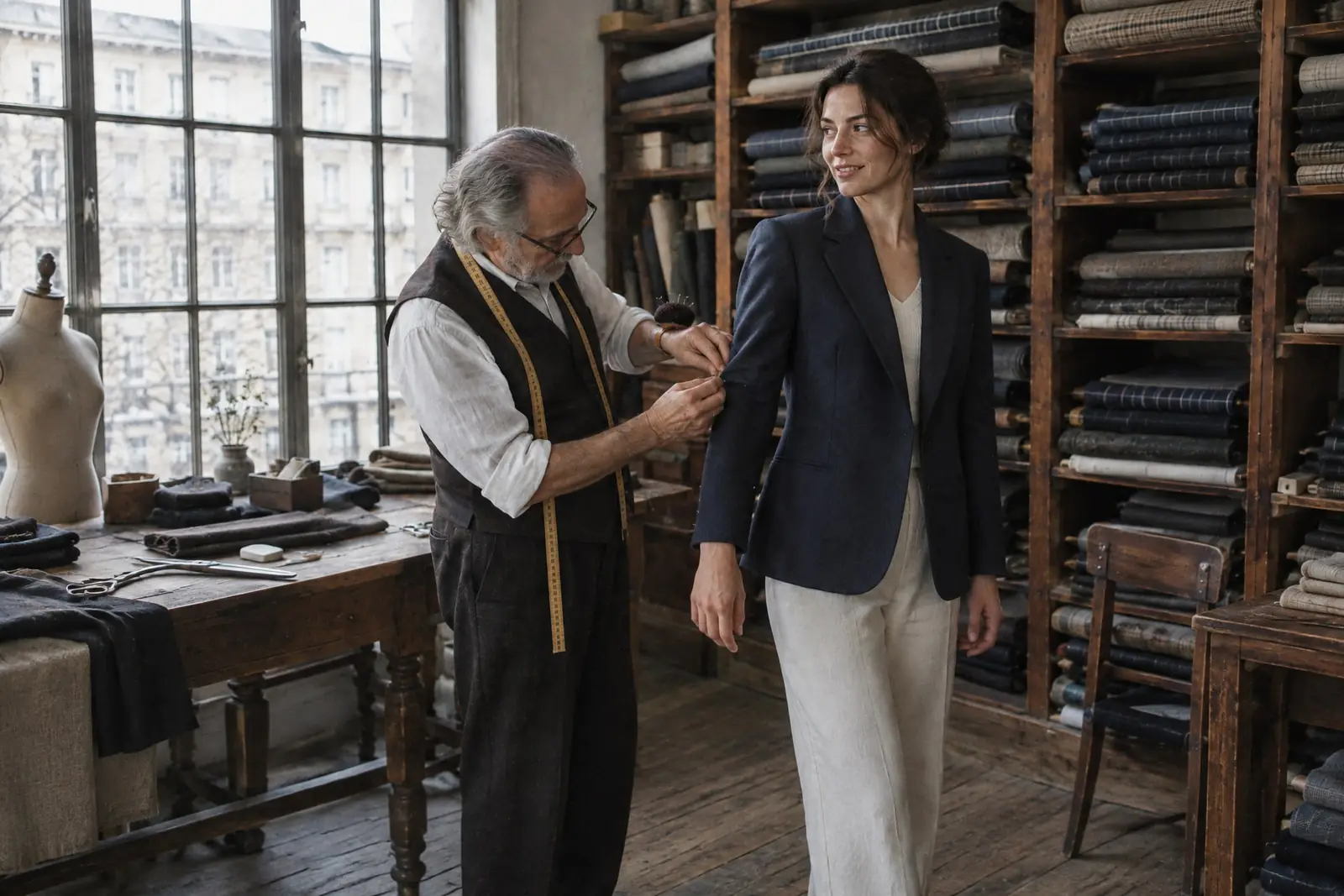
A simple outfit that fits well will always look better than an expensive one that doesn’t. Fit is the quiet detail that makes clothes look like they were chosen for you, rather than borrowed from someone else.
This has nothing to do with size. Every body can wear clothes that fit. The goal is to let the clothes sit comfortably on the body you have, so you can stop thinking about them.
Why fit matters more than the label
Sizes vary between shops, between cuts and even between colours of the same item. The number on the label tells you very little. What matters is how the piece behaves when you move, sit and reach.
Good fit usually means three things:
- The seams sit where they should. Shoulders at your shoulders, waistband at your waist or hips, depending on the cut.
- The fabric lies smoothly. No pulling into lines, no gaping, no large pools of extra fabric.
- You can move. You can sit, lift your arms and walk without adjusting anything.
Shirts and tops
The shoulders are the most important part of any shirt or blouse, because they’re the hardest thing to alter.
- Shoulder seam: it should sit at the edge of your shoulder bone. Dropped-shoulder styles are designed to sit lower, and that’s fine when it’s intentional.
- Buttons: with a button-up shirt, look for gaps between buttons across the chest. If the fabric pulls into small horizontal creases, try the next size or a different cut.
- Sleeves: long sleeves should end around the wrist bone when your arms are relaxed. If you plan to wear the shirt under a jacket, a little shirt cuff showing is a nice detail.
- Length: a shirt meant to be tucked should stay tucked when you raise your arms. A shirt meant to be worn untucked usually looks best ending around the middle of the zip on your trousers.
For knitwear and T-shirts, the same rules apply loosely. A relaxed fit is lovely, but it should look chosen, not stretched or swamping.
Trousers and jeans
- Waist: you should be able to fit two fingers in the waistband without a belt doing all the work. If you need to pull the belt very tight, the waist is too big. If the waistband digs in when you sit, it’s too small.
- Seat: the fabric should follow your shape without pulling into lines across the front or bagging at the back.
- Rise: this is the distance from crotch to waistband. Try different rises, as the right one depends on where you feel comfortable, and it changes how a whole outfit looks.
- Length: this depends on the cut. Wide and straight legs usually look best just grazing the top of your shoe or touching the floor with heels. Slim and cropped styles can end at or just above the ankle.
Sit down in the fitting room. Trousers that look fine standing can feel very different on a chair.
Jackets and coats
- Shoulders: as with shirts, the seam should end where your shoulder ends. Too wide and the jacket looks borrowed; too narrow and you’ll see a dent at the top of the sleeve.
- Buttoning: a tailored jacket should button without the fabric pulling into an X shape around the button.
- Sleeves: long enough to cover your wrist bone, short enough to show a little of whatever you wear underneath.
- Coats: try them on over the thickest layer you’ll realistically wear, like a chunky knit. A coat that only fits over a T-shirt won’t get much use in winter.
Dresses and skirts
- Bust and waist: for fitted dresses, check that the bust darts or seams line up with your body, and that the waist seam sits at your natural waist (unless the style is meant to sit higher or lower).
- Zip: it should close smoothly without you holding your breath.
- Movement: walk, sit and climb a step. A pencil skirt or fitted dress should allow normal movement. If it rides up a lot when you sit, consider a different cut or size.
- Length: choose the length you feel most at ease in. There’s no rule that one length suits a certain age or body.
Quick fitting room checks
Before you buy, run through these in front of the mirror:
- Reach forward as if hugging someone. Does the back pull tight across the shoulders?
- Lift both arms. Does the top ride up a lot, or the jacket lift with you?
- Sit down. Does the waistband dig in? Do buttons strain?
- Turn around. Use a second mirror or your phone camera to see the back.
- Check the fabric. Is it lying smoothly, or are there lines pointing at a problem area?
If something nearly passes, ask yourself whether it’s an easy alteration.
When tailoring is worth it
A good tailor can make an almost-right piece feel made for you. Some changes are simple and usually affordable:
- Shortening trousers, sleeves or hems
- Taking in a waistband
- Slimming the leg of trousers
- Taking in the sides of a shirt
- Moving buttons slightly
Other changes are complex and rarely worth it: altering shoulders, adding length, or enlarging something that’s too small overall.
A useful rule: tailor the pieces you wear most and plan to keep for years, like a coat, a jacket or your favourite trousers. If you’re not sure whether something earns its place, our guide to cost per wear can help you decide. Looking after well-fitting clothes matters too, as stretched or shrunk fabric changes the fit over time, so the clothing care guide is worth a read.
Fit and comfort go together
When clothes fit, you stop tugging, tucking and adjusting. You stand differently and forget about what you’re wearing, which is exactly the point. If you only change one thing about how you shop, make it this: buy for fit first, then for colour and style. A capsule wardrobe built from pieces that truly fit will serve you far better than a full rail of near-misses.
Keeping track of what works
Once you know which cuts suit you, it’s much easier to repeat the success. In Amalook, you can photograph your wardrobe and see everything in one place, so it’s easy to notice which pieces you reach for again and again. Often those are simply the ones that fit best, and that’s a useful clue next time you shop.