What to wear in 60 degree weather, with a layer table
60°F is about 16°C. What to wear for walking, sitting and windy days, plus how many degrees each layer is worth, using ASHRAE clothing insulation values.
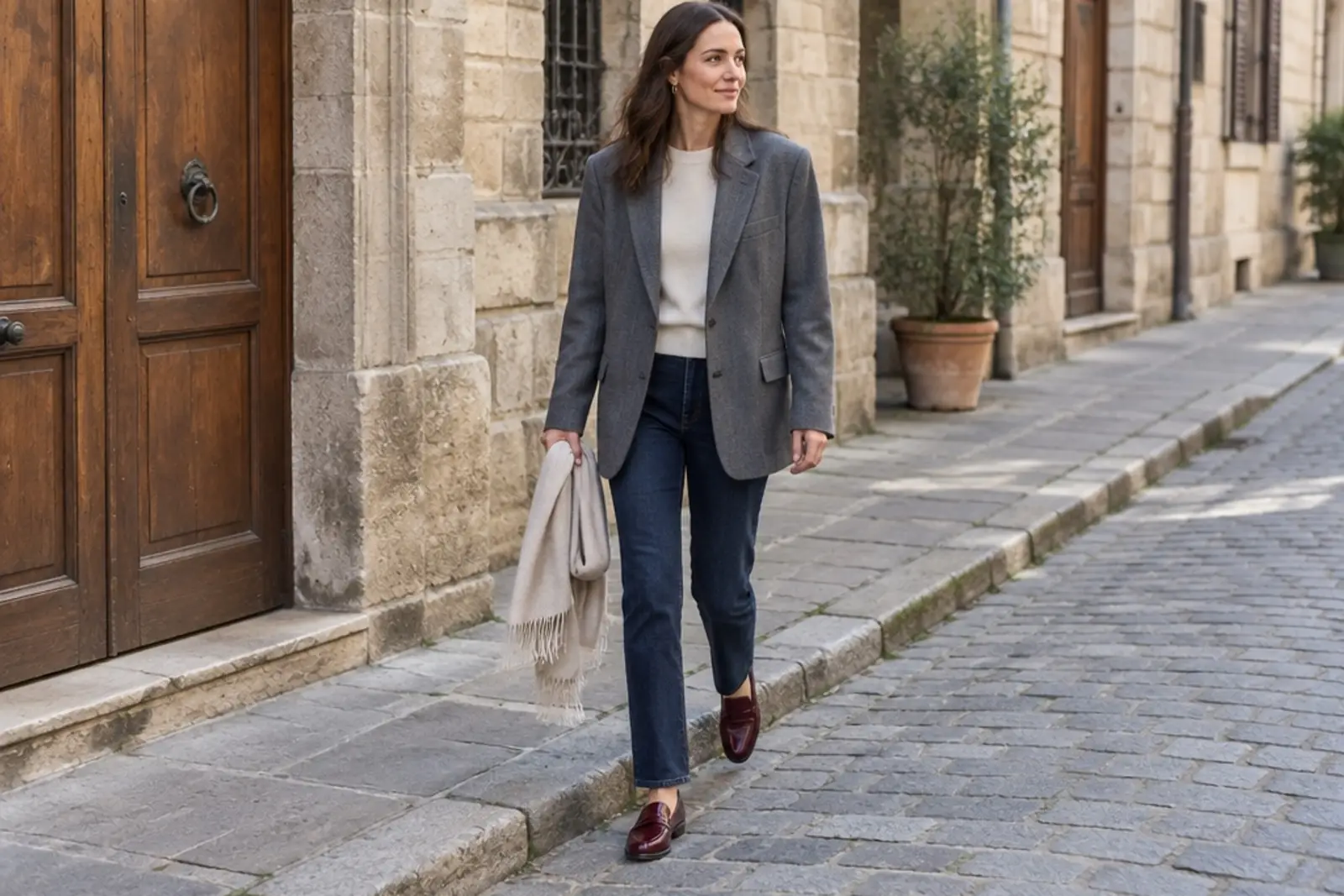
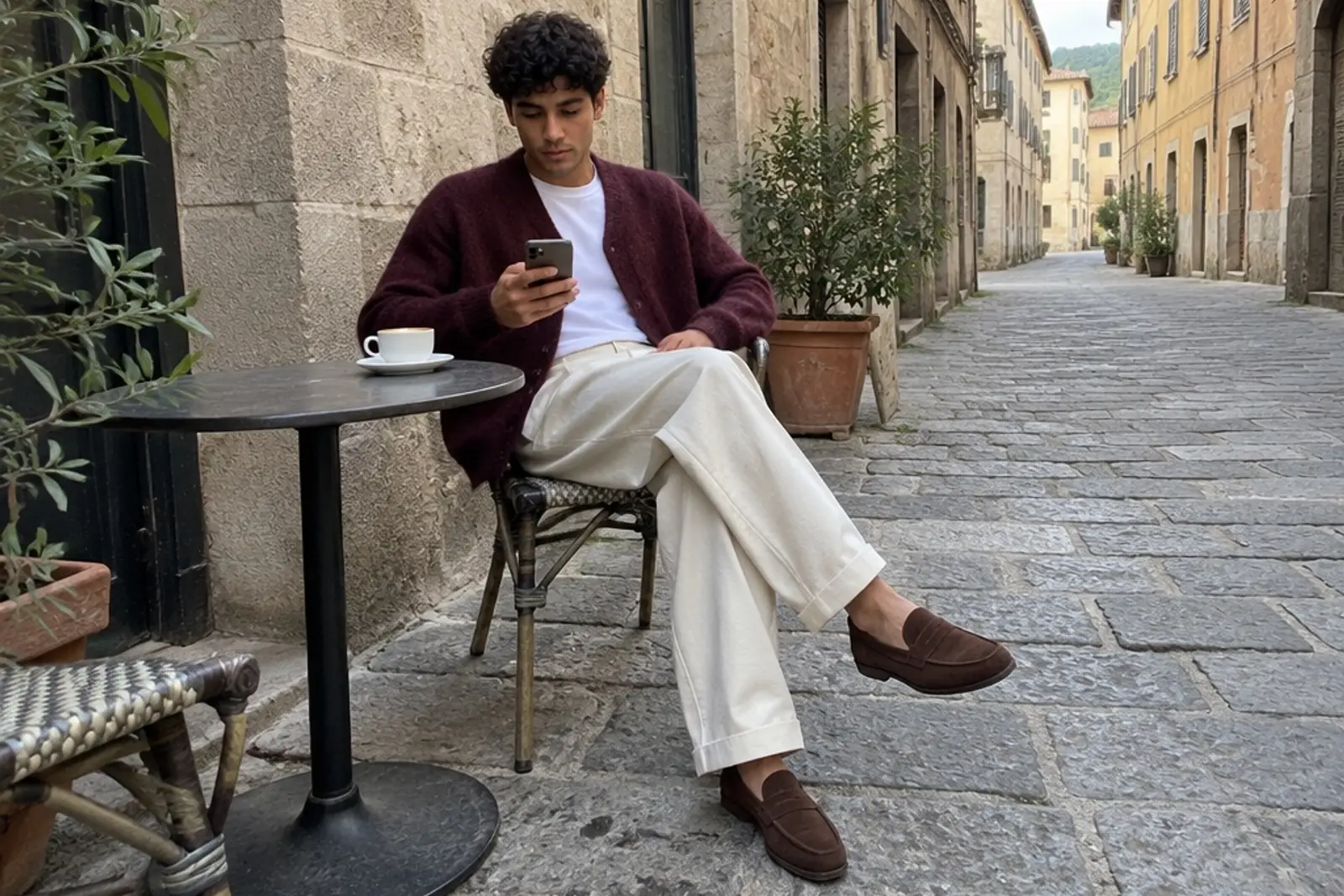
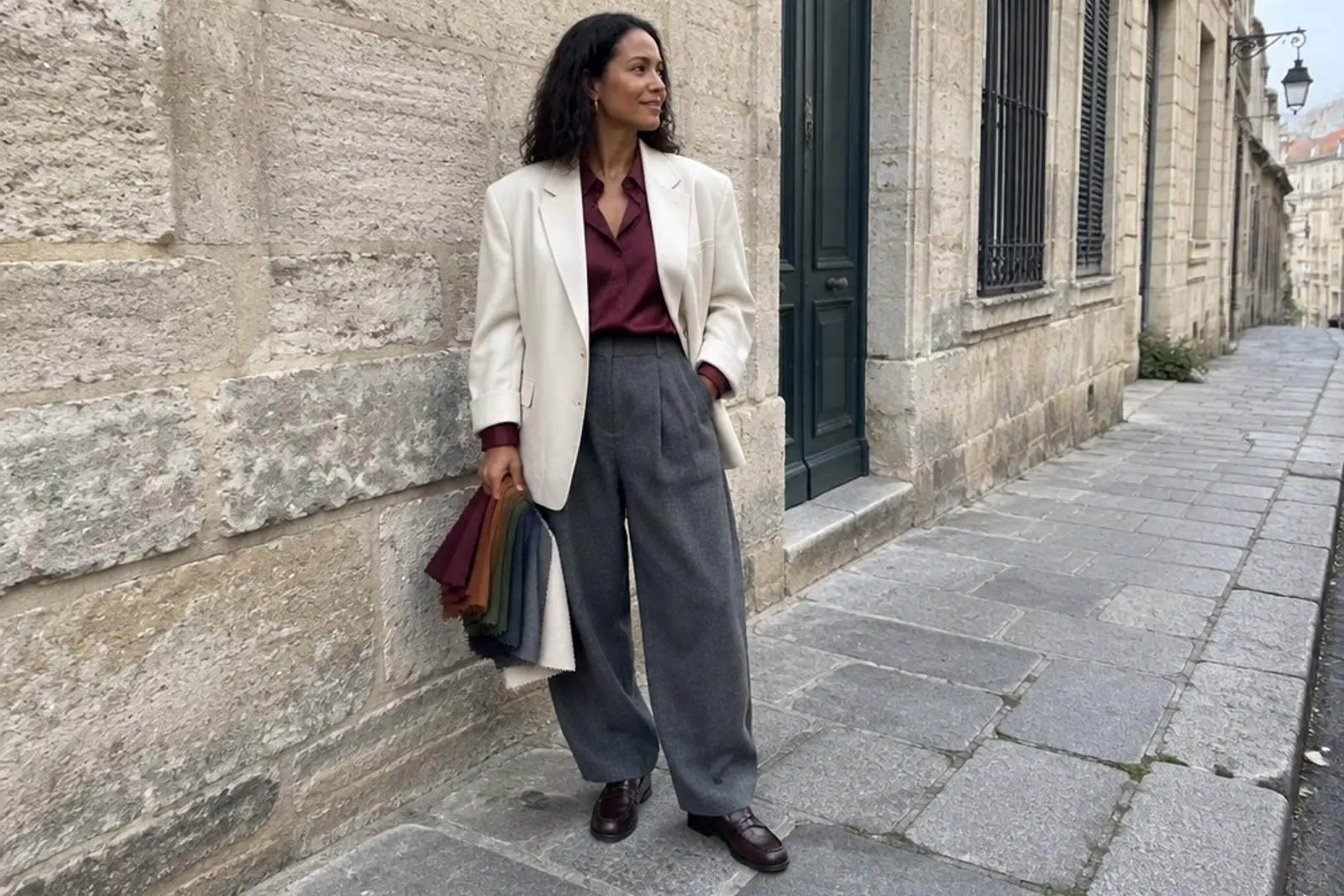
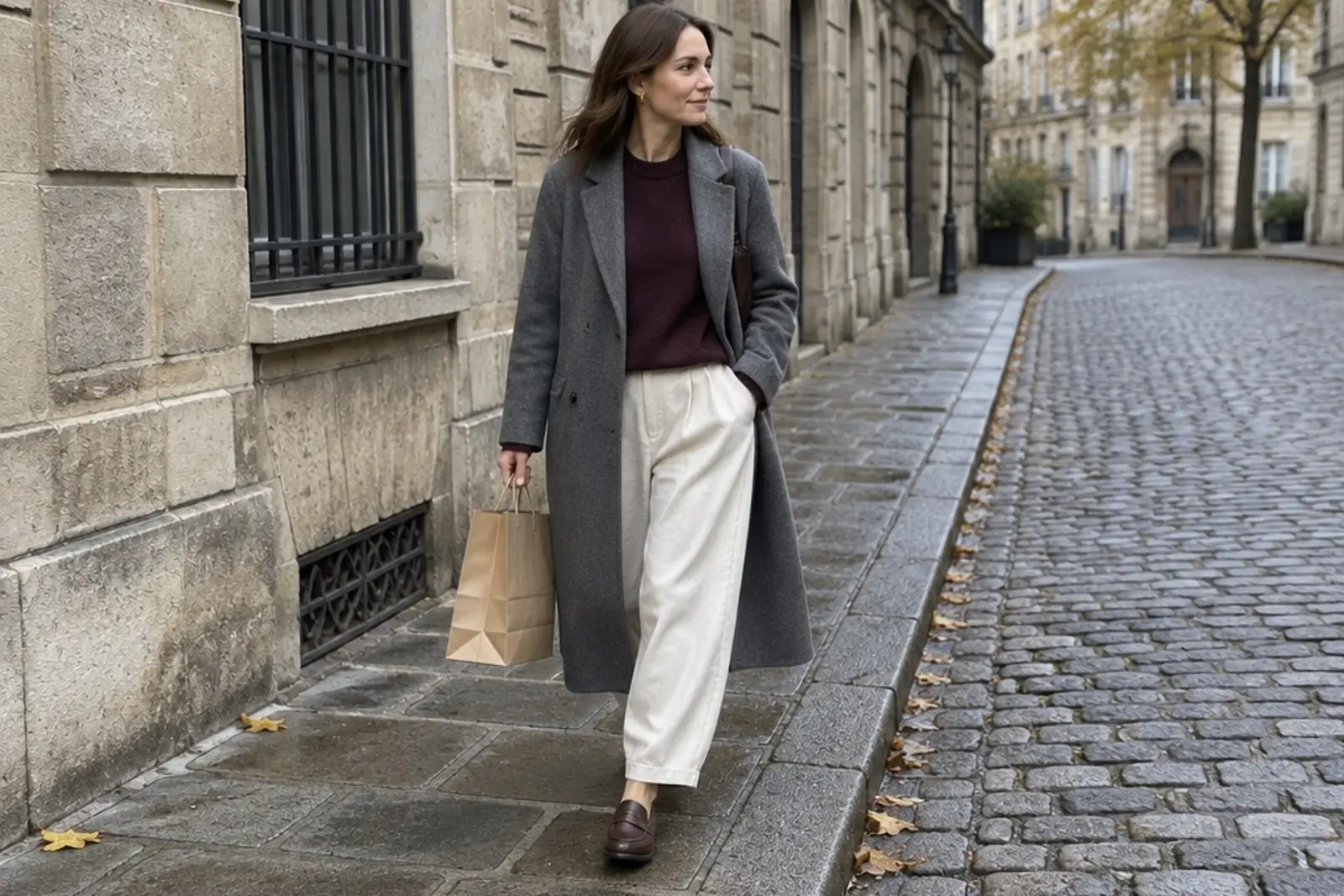
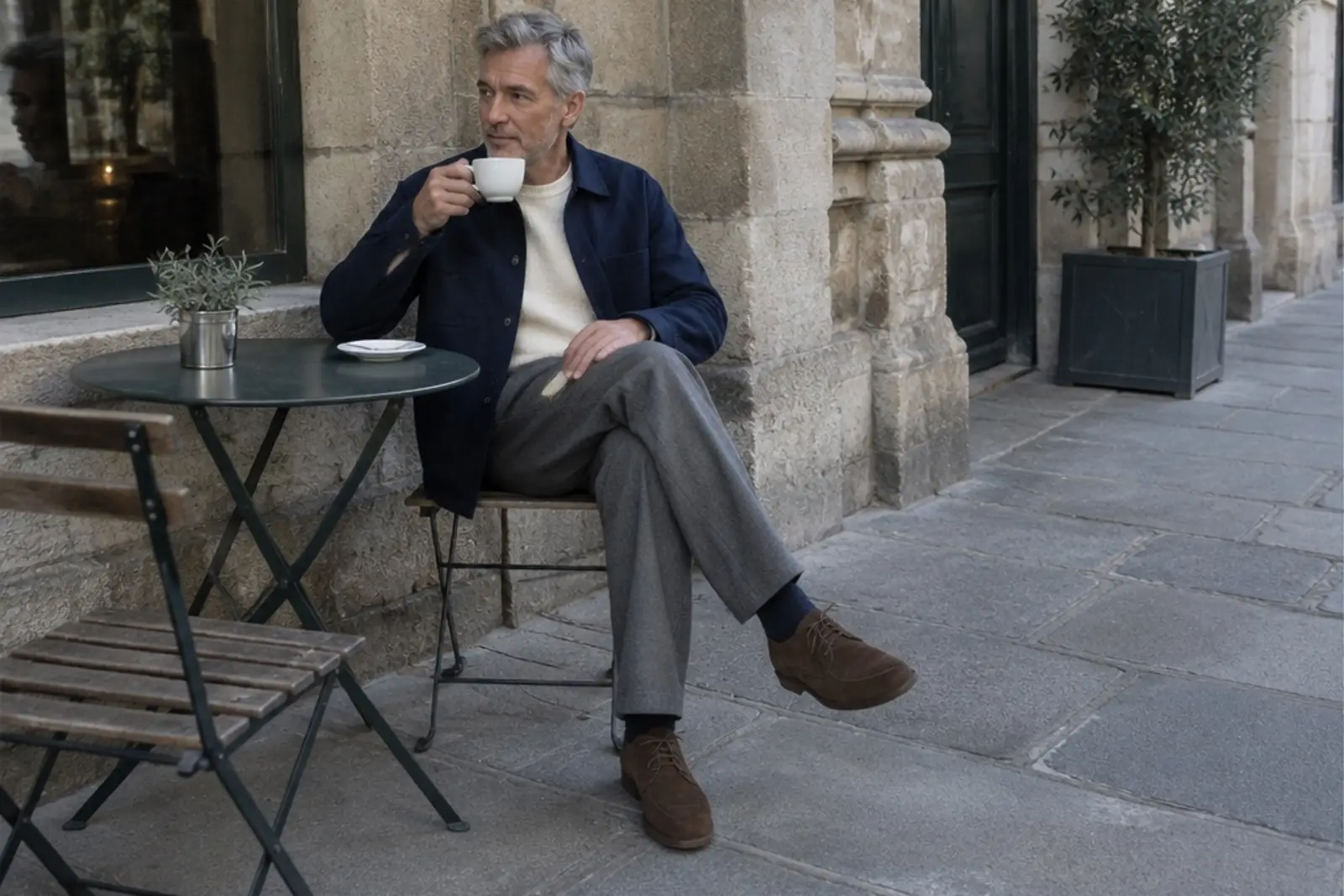
At 60°F, about 16°C, most people are comfortable in a long-sleeved top and trousers with one layer they can take off, such as a light jacket, overshirt or thin jumper. If you’ll be sitting still, in shade or in wind, add a warmer layer. If you’ll be walking in the sun, you may not need the top layer at all.
Sixty degrees feels different from one hour to the next, which is why the same forecast can leave you shivering at a café table and too warm on the walk there. Below is a starting outfit, and a way to work out how much each extra layer actually changes things.
A simple 60 degree outfit
Start from three parts, then change one at a time:
- Base: a long-sleeved T-shirt, fine knit or cotton shirt.
- Bottom: jeans, trousers or a midi skirt with tights if you tend to run cold.
- Removable layer: a denim jacket, light trench, overshirt, blazer or thin cardigan.
Closed shoes make sense at this temperature: loafers, trainers or ankle boots. Pick a top layer that you’d be happy to carry, and make sure what’s underneath looks finished once it’s off. Our layering guide goes into this in more detail.

How many degrees is each layer worth?
Most guides to this temperature stop at “wear layers”. There’s a way to put rough numbers on it. Engineers who design heating and cooling use a unit called the clo to measure how much a garment insulates, and ASHRAE’s Standard 55 publishes values for ordinary clothes. It also gives a rule: for near-sedentary people, each 1 clo shifts the most comfortable temperature by about 11°F (6°C).
We multiplied ASHRAE’s garment values by that rule:
| Adding this | Insulation (clo) | Worth roughly |
|---|---|---|
| T-shirt underneath | 0.08 | 0.9°F / 0.5°C |
| Thick trousers instead of thin | 0.09 | 1.0°F / 0.5°C |
| Boots instead of shoes | 0.08 | 0.9°F / 0.5°C |
| Thin long-sleeved sweater | 0.25 | 2.8°F / 1.5°C |
| Sleeveless knit vest, thick | 0.22 | 2.4°F / 1.3°C |
| Flannel shirt or sweatshirt | 0.34 | 3.7°F / 2.0°C |
| Thin suit jacket or blazer | 0.36 | 4.0°F / 2.2°C |
| Thick long-sleeved sweater | 0.36 | 4.0°F / 2.2°C |
| Thick suit jacket or blazer | 0.44 | 4.8°F / 2.6°C |
Please read the limits. This rule comes from a standard about indoor comfort for people who are close to sitting still. It leaves out sun and wind, and the table doesn’t include coats, windbreakers or jeans. Treat the numbers as a way to compare layers. They don’t predict how you’ll feel.
Even so, two things stand out.
A thin knit and a blazer aren’t far apart. ASHRAE’s figures put a thick sweater and a thin jacket at the same 0.36 clo. Choose between them for looks and for how easily you can take them off.
Long sleeves on their own do very little. ASHRAE lists trousers with a short-sleeved shirt at 0.57 clo and with a long-sleeved shirt at 0.61. That’s less than half a degree Fahrenheit. If you’re cold, adding a layer will do far more than changing the sleeve.
Why 60 degrees is so hard to dress for
The sums also explain why this temperature feels awkward. Suppose short sleeves and trousers feel right at 75°F. By the indoor rule, a 15°F drop calls for about 1.4 more clo, which takes you to nearly 2 clo. ASHRAE’s warmest trouser outfit, with a shirt, T-shirt, sweater, suit jacket and long underwear, comes to 1.30.
Hardly anyone wears that at 60°F, and they don’t need to, because the rule was made for people sitting indoors. Outside, walking makes heat and sunshine adds it. Take those away, by sitting down in the shade with a breeze, and the same outfit can quickly feel thin. So what you’ll be doing matters as much as the forecast.
Adjust for your day
| Your day | Change |
|---|---|
| Walking in the sun | Drop the top layer or plan to carry it |
| Sitting outdoors or waiting around | Add a warmer knit or a thicker jacket |
| Windy | Choose a closely woven outer layer, and something that closes at the neck |
| Rain | Swap the top layer for a light waterproof, and avoid suede |
| Cool morning, warm afternoon | Choose a layer that packs small or ties easily |
| Running or hard exercise | Dress lighter than you would for a walk, as you’ll warm up fast |
People also differ. ASHRAE itself notes that in the same room some will choose a sweater and others short sleeves, so if you always run cold, start one row further down the table below.
Outfits from 50°F to 75°F
This table is our suggestion. The outfits are a starting point we chose by judgement, and only the clo figures in brackets come from ASHRAE, where a matching outfit is listed.
| Temperature | Starting outfit |
|---|---|
| 75°F / 24°C | Short-sleeved top with trousers or a knee-length skirt (0.54 to 0.57) |
| 70°F / 21°C | Long-sleeved shirt and trousers (0.61), or a T-shirt with a layer in your bag |
| 65°F / 18°C | Shirt or fine knit, trousers and a thin extra layer |
| 60°F / 16°C | Shirt and trousers with a blazer (0.96), or with a T-shirt and sweater (1.01) |
| 55°F / 13°C | Shirt, sweater and a jacket (ASHRAE’s closest outfit also has long underwear, 1.30) |
| 50°F / 10°C | Add a proper coat. ASHRAE’s table stops short of this |
Walking in the sun? Go up a row. Sitting in the shade or wind? Go down one. For a trip, check the forecast against this table before you decide what to pack.

Planning around the forecast
The easiest time to deal with a 60 degree day is the night before. Check the temperature for when you’ll actually be outside, not just the day’s high, and put the removable layer by the door. If you often get this wrong, write down what you wore and how it felt for a couple of weeks. You’ll soon have a more accurate table than ours.
We’re building Amalook to help with that kind of planning. It isn’t released yet, and it’s designed to let you plan outfits on a calendar and, if you allow it, take local weather into account when suggesting what to wear.
Common questions
Is 60 degrees cold enough for a jacket?
Usually a light one, especially in shade, in wind or if you'll be sitting still. If you're walking in the sun, a jumper or an overshirt is often enough. Take a layer you can remove.
What is 60°F in Celsius?
60°F is about 15.6°C, which most people round to 16°C.
Can I wear shorts in 60 degree weather?
Some people will, particularly if they're running or walking fast in the sun. For sitting outside, most people will be happier in trousers or a long skirt.
How much warmer does a jumper make you?
Using ASHRAE's indoor figures, a thin long-sleeved sweater is worth about 3°F (1.5°C) and a thick one about 4°F (2°C). These are guides for near-sedentary people indoors, so outdoors treat them as rough.
Sources
Checked on 8 November 2026. Listings change, so check them again before you decide.