What to wear to a funeral: what six guides agree on
What to wear to a funeral, from six published guides: where they agree, where they differ on jeans, what faith traditions ask and how to read a dress code.
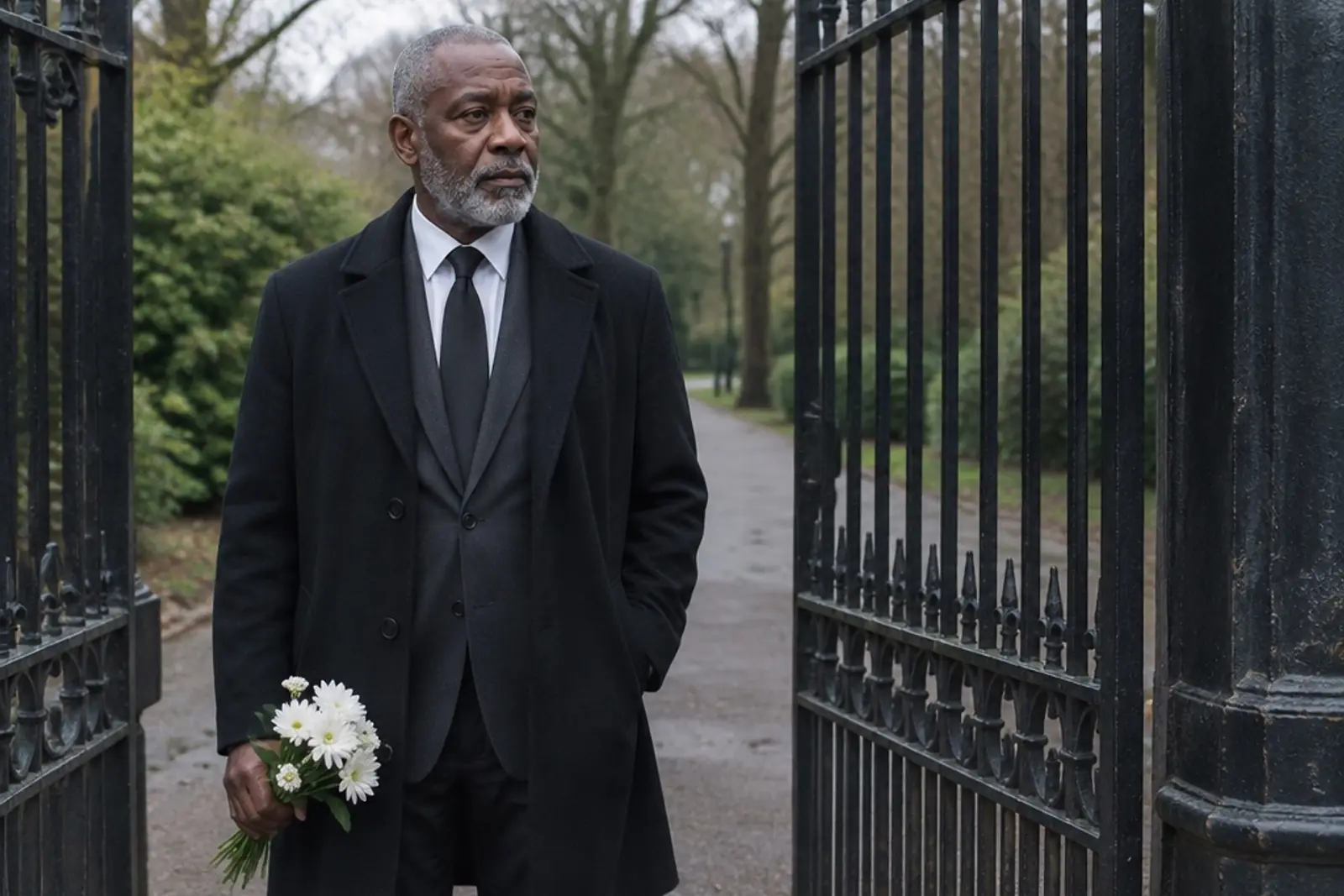
Wear smart, modest clothes in a dark colour: black, navy or charcoal. A dark suit or dress works, and so do dark trousers or a skirt with a plain top and a jacket. If the family has asked for something else, such as bright colours or white, follow that. We read six published guides. None requires black, and what they share is neat, serious, unshowy clothing.
If you’re reading this the night before, that paragraph is enough. The rest is for the details: where the guides differ, what different faiths ask of guests, and how to read the wording on an invitation.
What do the six guides say?
We read these pages on 19 November 2026: two UK funeral bodies, two US ones, an etiquette institute and a Jewish education site. The summaries are ours, so follow the links for the original wording.
| Guide | On black | On jeans |
|---|---|---|
| National Association of Funeral Directors (UK trade body) | The default, but not compulsory. Dark navy and charcoal are accepted | Not appropriate in most cases. Smart dark jeans may be fine if the family asks for casual dress |
| Co-op Funeralcare (UK funeral director) | Dark, but it needn’t be black. It names grey and burgundy | Not traditional, but there’s no rule against them. Ripped jeans are on its avoid list |
| Dignity Memorial (US funeral provider) | Black, grey and navy for a traditional church service. A wider range elsewhere | Avoid them, unless it’s a very casual celebration of life or the family says otherwise |
| Remembering A Life (US National Funeral Directors Association) | A tradition that’s “not required”. Avoid bright colours and busy patterns | Not mentioned. Suits and dresses are always appropriate |
| Emily Post Institute (US etiquette) | Attire isn’t limited to black or dark grey, but it should be clean, neat and pressed | Not mentioned |
| My Jewish Learning (Jewish funerals) | A dress, or a coat and tie. An editor’s note adds any dark business outfit, including a trouser suit | Not mentioned |
None of the six says black is required. Dark and plain is the common ground, and jeans are the point where they disagree. If you don’t know the family’s wishes, smart trousers avoid the question.
What if you don’t own a dark suit?
You don’t need one, and none of the guides tells you to shop. The UK association puts it plainly: “You do not need to buy new clothes.”
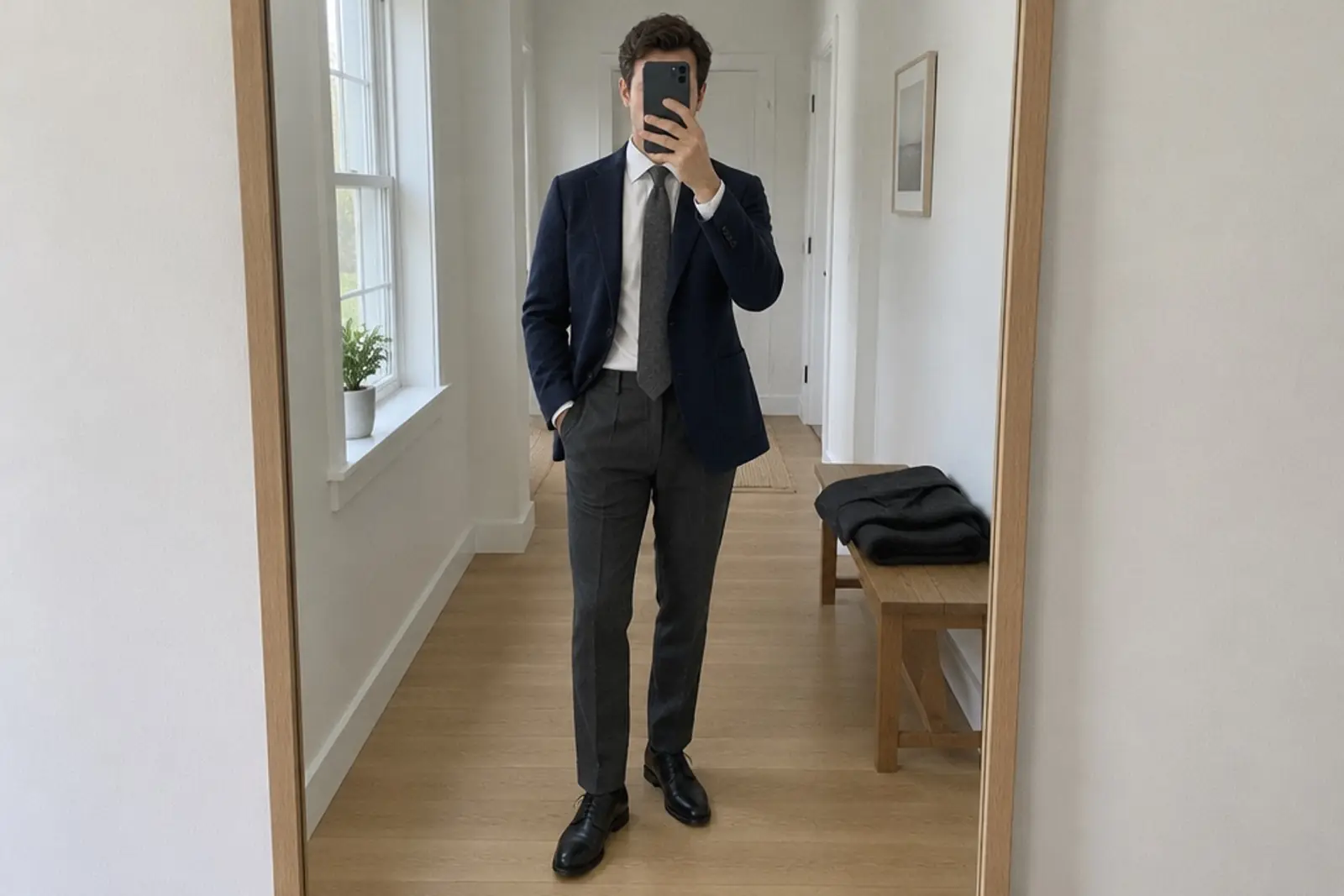
The same guide accepts smart dark trousers with a dark blazer and a dark tie in place of a suit. Dignity Memorial says a sport coat with smart trousers is almost always acceptable. Co-op Funeralcare goes further and says that if you have none of these things, you should wear what you feel comfortable in, because being there matters more than the outfit.
Here’s how that looks with ordinary wardrobe pieces. This table is our own summary of what the guides accept.
| If you have it | If you don’t | |
|---|---|---|
| Top | White or pale shirt, plain blouse | Plain fine knit or a plain jumper in a dark or neutral colour |
| Bottom | Suit trousers, dark skirt or dress | Dark smart trousers, such as navy or charcoal work trousers |
| Layer | Suit jacket or dark blazer | Dark cardigan or a smart dark coat that stays on |
| Shoes | Black leather shoes, low heels or flats | The darkest, plainest closed shoes you own, cleaned |
| Extras | Plain dark tie, simple jewellery | No tie is better than a loud one |
What should you avoid?
The lists overlap a lot. These are the items named by at least one of the three funeral directors’ guides, unless the family has asked for them:
- Sportswear and trainers. All three name trainers or athletic shoes. Dignity Memorial makes one exception: a service that involves a walk, such as a scattering in woodland.
- Bright colours and loud patterns. Fine when the family requests them, and best left at home when they haven’t.
- Flip-flops and open sandals.
- T-shirts, caps and football shirts.
- Slogans and heavy branding.
- Revealing clothes. The UK association mentions low necklines, short hemlines and transparent fabrics.
- Strong perfume or aftershave. The UK association points out that chapels are small, enclosed rooms.
- Wedding-level formality. The same guide says a morning suit or an elaborate gown can look out of place on an ordinary guest.
What do different faiths ask guests to wear?
Dark clothing isn’t the rule everywhere. In some traditions white is the colour of mourning, and several ask guests to cover their heads or remove their shoes. This table summarises what the guides say for guests. Customs vary between families and communities, so treat it as a starting point and ask if you can.
| Service | What guests are asked to wear | Source |
|---|---|---|
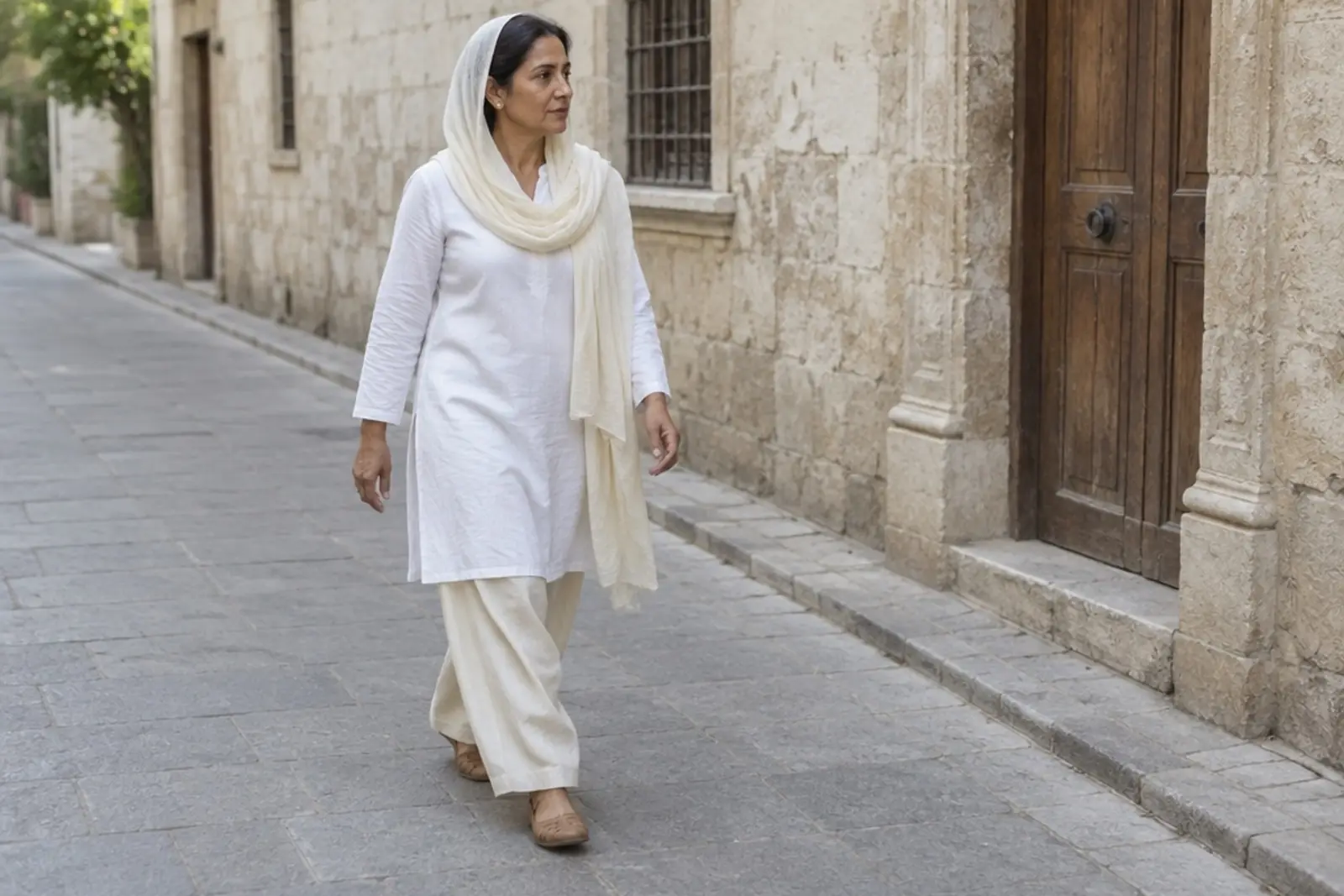
| Muslim | Modest clothing. Women cover their hair with a scarf, and their arms and legs. Men wear long trousers. Shoes come off before entering the mosque | NAFD |
| Jewish | Dark, modest clothing. Men usually cover their heads, though this varies by congregation, and a kippah is generally available at the funeral home or cemetery. At Orthodox services women cover arms and knees | NAFD, My Jewish Learning |
| Hindu | White or light, muted colours are traditional, not black. Dark clothing on guests who aren’t Hindu is generally understood. Cover arms and knees | NAFD, Emily Post, Dignity Memorial |
| Sikh | Modest clothing. Everyone covers their head inside the gurdwara, and scarves are often available at the entrance. Shoes come off. White or light colours are traditional, and dark clothing on guests is respected | NAFD |
| Buddhist | It varies widely by tradition. White or pale colours are worn in some East Asian traditions. Otherwise smart, modest and muted | NAFD |
| Christian | Dark, smart clothing. Head coverings aren’t required in most UK churches. Catholic and high Anglican services may be more formal | NAFD |
Dignity Memorial adds that at a Chinese funeral guests may wear pink or white, depending on the age of the person who died. That’s a good example of a detail you can’t guess, so ask a family member or the funeral director. A plain scarf in your bag helps wherever women are asked to cover their hair.
What do you wear to a celebration of life?
Whatever the family asks for. A celebration of life is often less formal than a traditional funeral, and the invitation usually says so. The UK association describes three kinds of wording you might see:
| The invitation says | What it means |
|---|---|
| Smart dress | Formal or business clothes, without the need for black. Dark colours are still fine |
| Bright colours, or a named colour | Wear it. The guide calls this “a genuine invitation”, so you needn’t fall back on black |
| Casual dress | Used for informal gatherings, often at home or in a garden. Smart dark jeans may be acceptable here |
Dignity Memorial mentions requests such as sports jerseys or a single colour. It also suggests small personal touches even when there’s no theme, like a floral scarf for a gardener, as long as they stay respectful.
If the invitation says nothing, the two funeral bodies give slightly different advice. The UK association says to default to smart dark clothing. Dignity Memorial says to let the place and the family’s background guide you: a restaurant, park or beach calls for something different from a place of worship. Both end with the same suggestion, which is to ask.
Does the venue or the weather change anything?
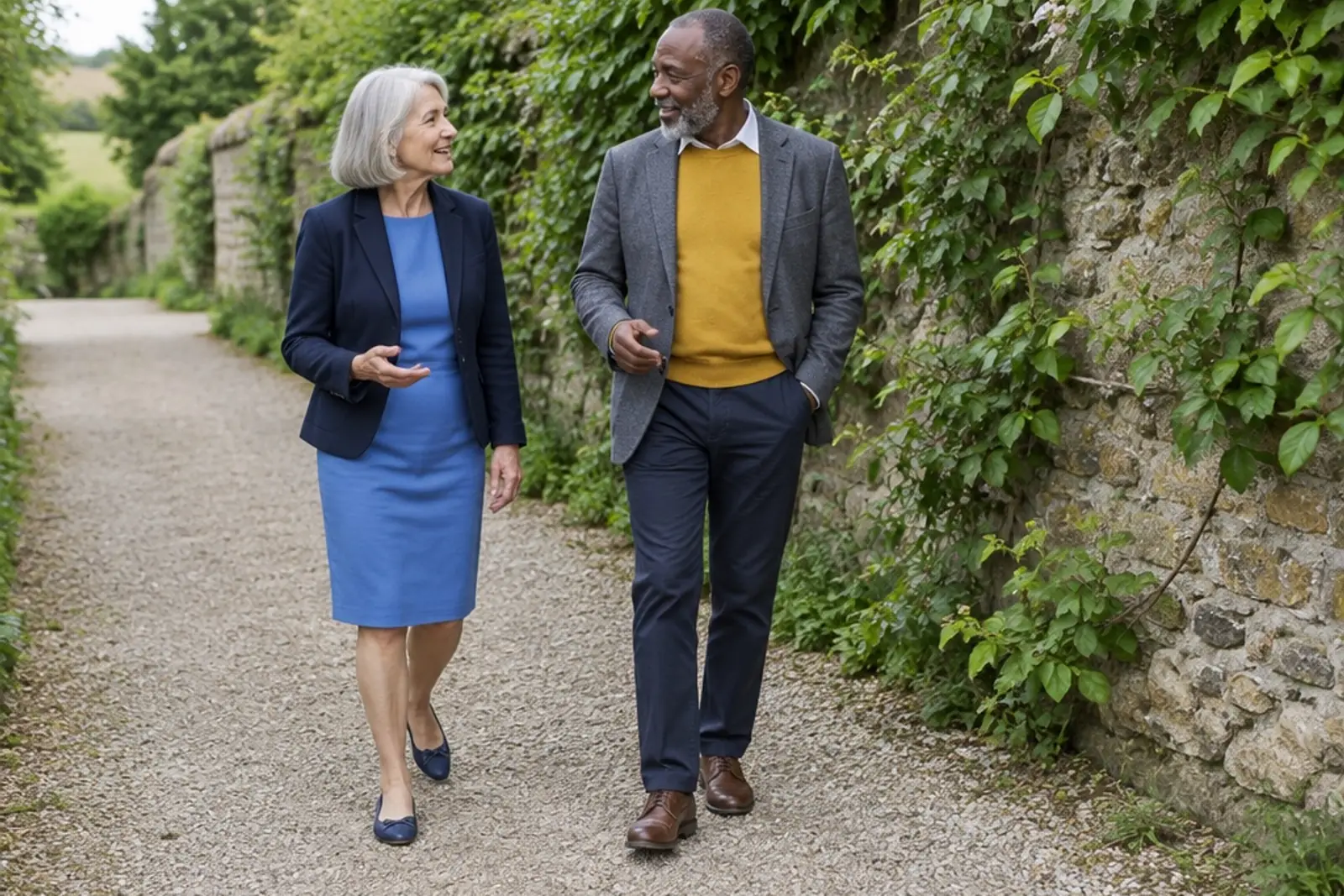
It changes the practical details more than the dress code.
- Graveside. You’ll stand outdoors on ground that may be soft or uneven. The UK association advises against stiletto heels, which sink, and suggests a coat or layers even in warmer months.
- Church or chapel. Usually the most formal setting. The same guide notes that some churches are cold even in summer, so bring a smart layer.
- Summer. Lighter fabrics such as cotton and linen in dark or muted colours. Co-op Funeralcare says it’s fine to take a suit jacket off if it becomes uncomfortable.
- Winter. A dark, smart coat with a scarf and gloves. Co-op Funeralcare also suggests a plain layer hidden under a shirt or blouse, and an umbrella.
- The wake or reception. Slightly less formal than the service, according to the UK association, but the same clothes are fine.
Our guide to dressing for changing weather covers layering in more detail.
What should children wear?
Children don’t need formal black. The UK association says school uniform is appropriate and often the easiest choice, and otherwise suggests neat clothes in dark or neutral colours and comfortable shoes. The Emily Post Institute says that children generally don’t wear black, and should wear something similar in style to the adults in their family.
Why does the advice vary so much?
Partly because funerals themselves have changed. Co-op Funeralcare says it’s seeing a shift towards more colourful funerals in the UK as families make the day more personal. A 2025 paper in the journal Clothing Cultures looked at what people wear to funerals in Leeds, using a pilot focus group with participants from different cultural groups. All of them reported that practices in their own group had changed, and the authors link this to personalised and themed funerals as well as to cultural diversity. It was a small pilot study, so it describes a direction, not how common each practice is.
That’s why one fixed rule no longer covers every service, and why all three funeral directors’ guides tell you to ask the family or the funeral home when you’re unsure.
Getting it ready the night before
Lay the outfit out the evening before and check three things: that it’s clean and pressed, that you can sit and stand in it comfortably for an hour or more, and that the shoes suit the ground you’ll be on. Put a plain scarf and a warm layer with it. If the service has a stated dress code, read the notice again.
For the levels of formality behind phrases like “smart dress”, see the dress codes guide. The jury duty guide describes a similar plain, modest outfit built from clothes most people already own. Choosing an outfit from your own wardrobe the night before is what we’re building Amalook to help with, though on a day like this, dark, plain and comfortable is all you need.
Common questions
Do you have to wear black to a funeral?
No. None of the six guides we read requires black. The funeral directors' guides call it traditional and accept navy, charcoal and other dark, plain colours. The family's own request comes first.
Can you wear jeans to a funeral?
The guides differ. The UK's National Association of Funeral Directors says jeans aren't appropriate in most cases, Co-op Funeralcare says there's no rule against them, and Dignity Memorial says to avoid them unless the service is very casual. Smart trousers are the safer choice.
What do you wear to a celebration of life?
Whatever the invitation asks for. If it asks for bright colours or a favourite colour, the National Association of Funeral Directors calls that a genuine invitation. If it says nothing, the same guide suggests smart dark clothing.
What if you don't own a suit?
You don't need one. The funeral directors' guides accept dark trousers with a dark blazer, or a sport coat with smart trousers, and the UK association says you do not need to buy new clothes.
Sources
Checked on 19 November 2026. Listings change, so check them again before you decide.
- National Association of Funeral Directors (UK): what to wear to a funeral (published February 2026, reviewed May 2026)
- Co-op Funeralcare (UK): what to wear at a funeral
- Dignity Memorial (US): what to wear to a funeral, memorial or celebration of life
- Remembering A Life, National Funeral Directors Association (US): attending a funeral
- Emily Post Institute: funeral etiquette at the service
- Emily Post Institute: religious customs at funerals
- My Jewish Learning: going to a Jewish funeral
- Almond and Simpson (2025): What to wear to a contemporary UK funeral, Clothing Cultures 11(1)