How to dress for changing weather: a layering guide
Cold mornings, warm afternoons, sudden rain. A practical guide to layering so you're comfortable all day without carrying half your wardrobe.
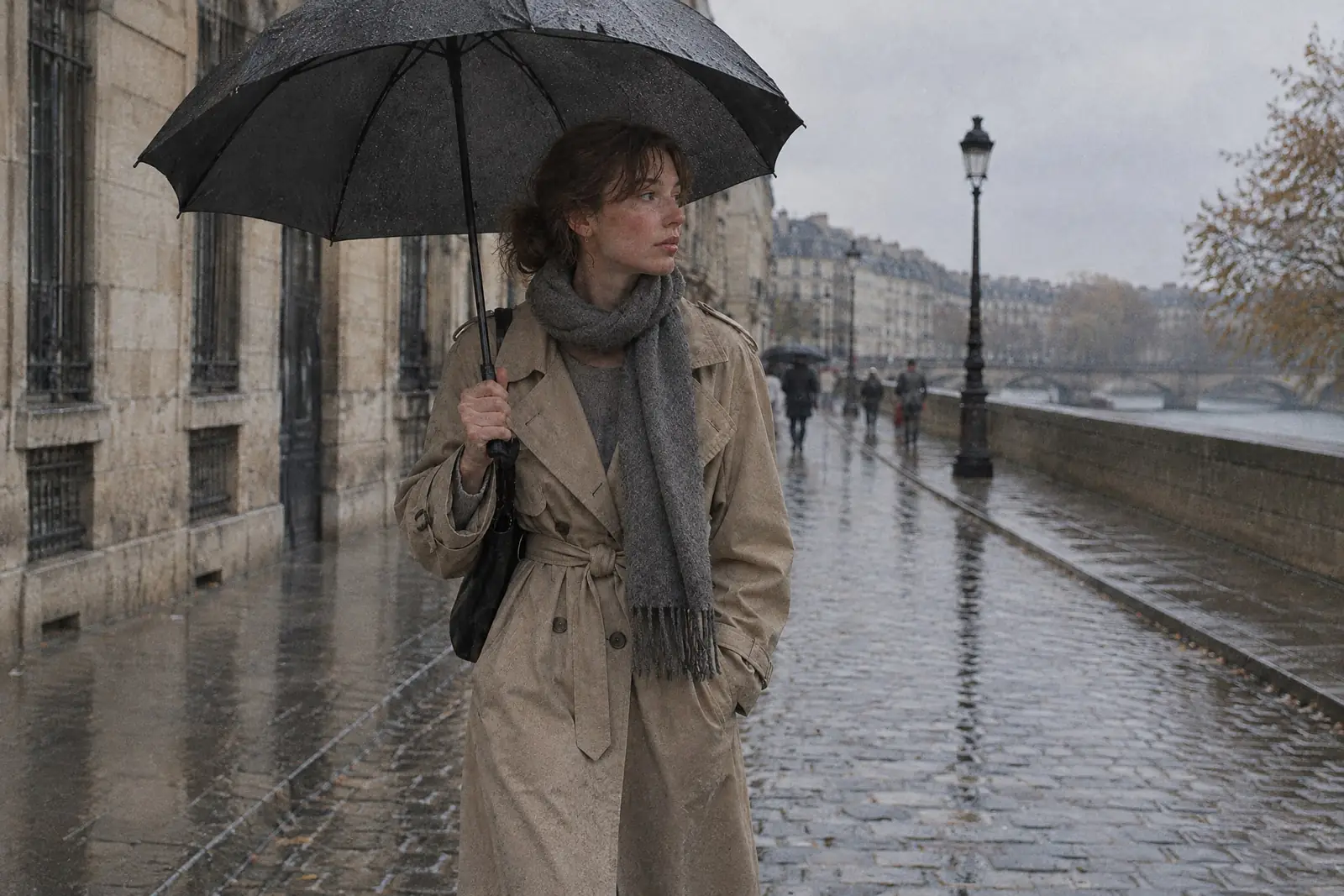
Spring and autumn are the hardest seasons to dress for. You leave home in a chilly morning, the afternoon turns warm, and by evening it’s raining. The answer isn’t a perfect single outfit. It’s layers.
The three-layer system
Outdoor clothing brands have used this idea for years, and it works just as well in the city:
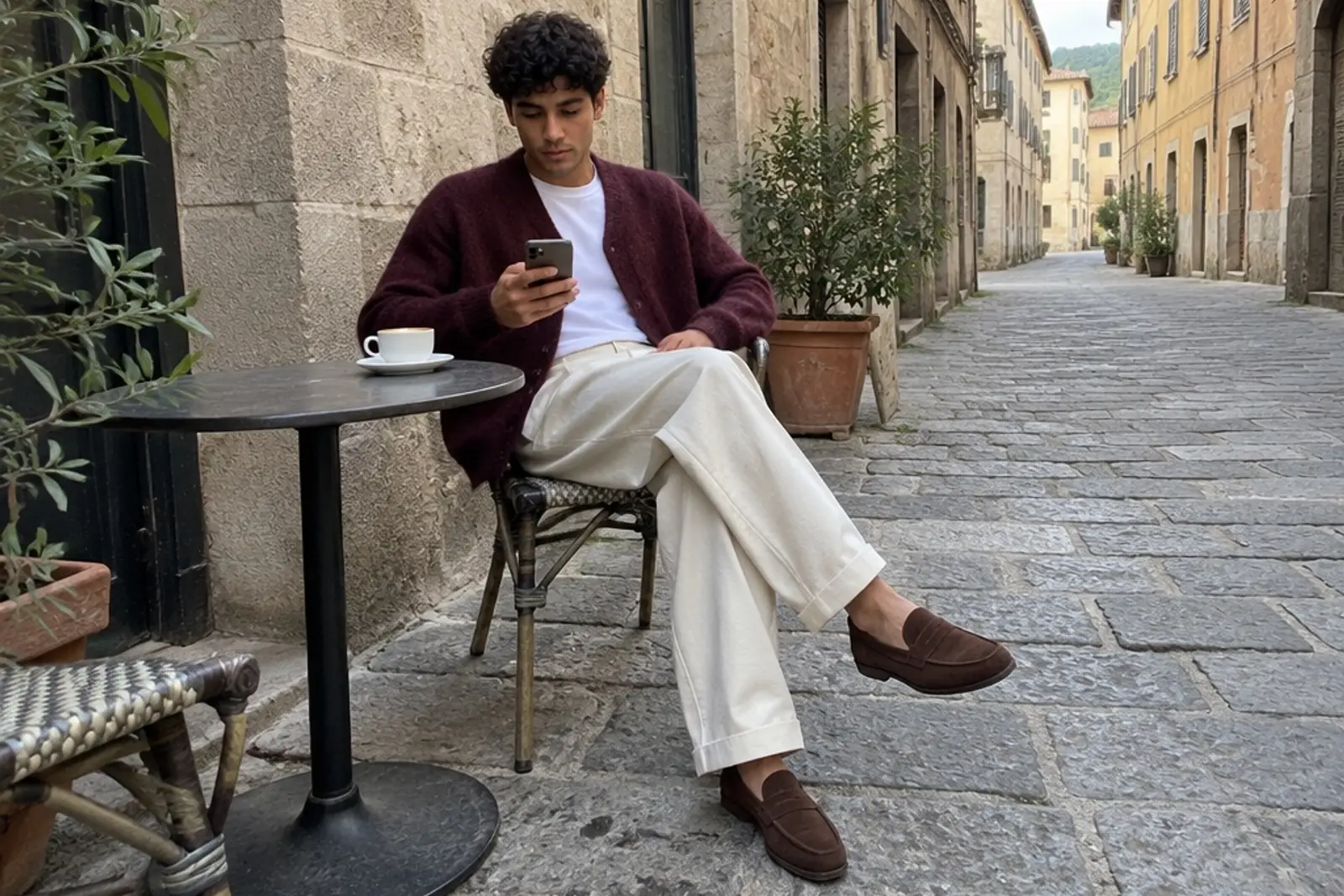
- Base layer: what sits against your skin. A T-shirt, a fine knit, a shirt. Choose breathable fabrics such as cotton, linen or merino wool.
- Middle layer: the warmth. A cardigan, a sweater, an overshirt, a light quilted vest.
- Outer layer: protection from wind and rain. A trench coat, a light jacket, a waterproof parka.
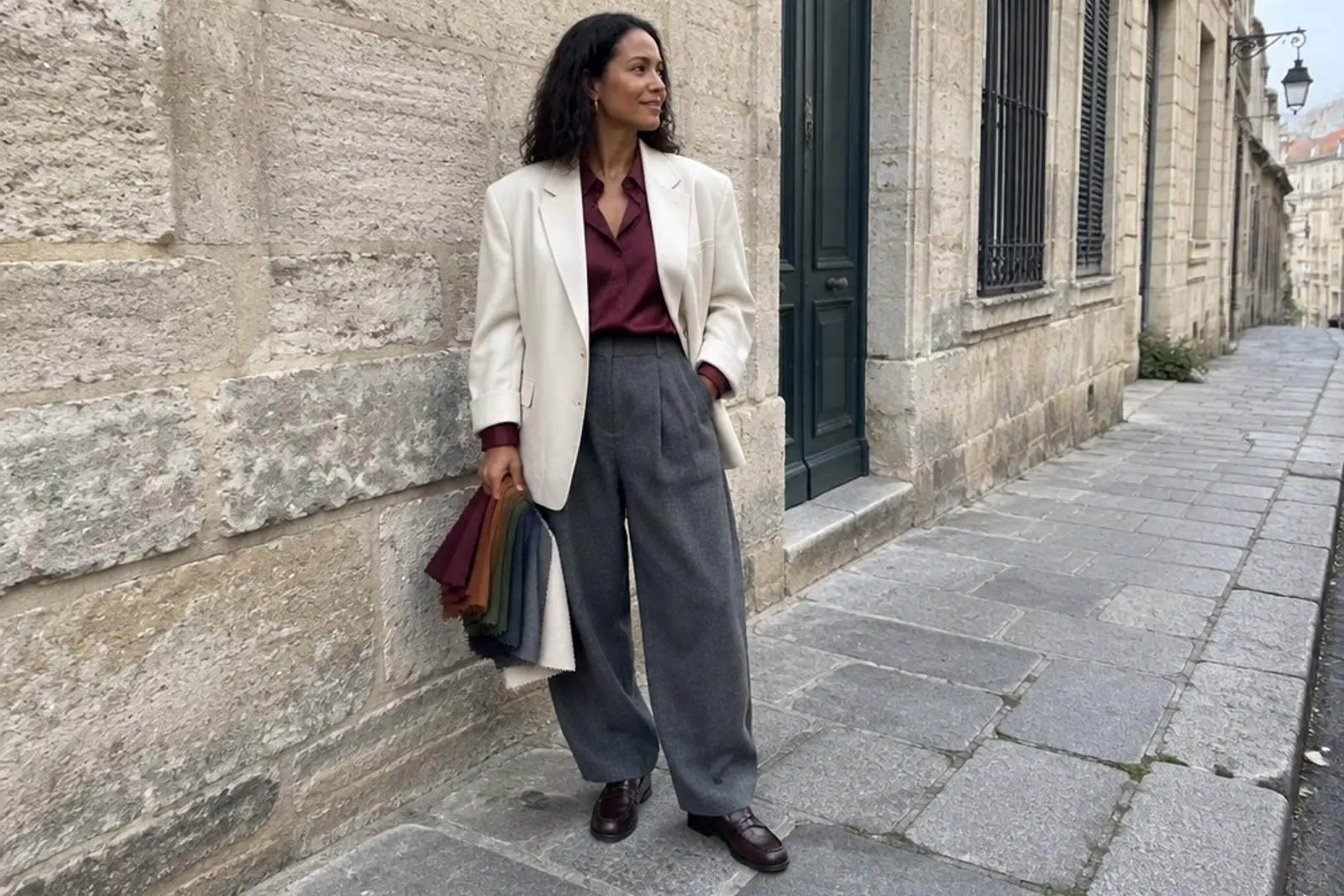
Each layer should look good on its own. When you take off the jacket at lunch, the outfit underneath should still feel finished.
Make layers easy to remove
The best layers for changing weather are the ones you can take off and carry without fuss:
- Open-front pieces, such as cardigans, overshirts and unbuttoned shirts, are easier than pullovers.
- Thin and warm beats thick. Two thin layers are more flexible than one heavy one.
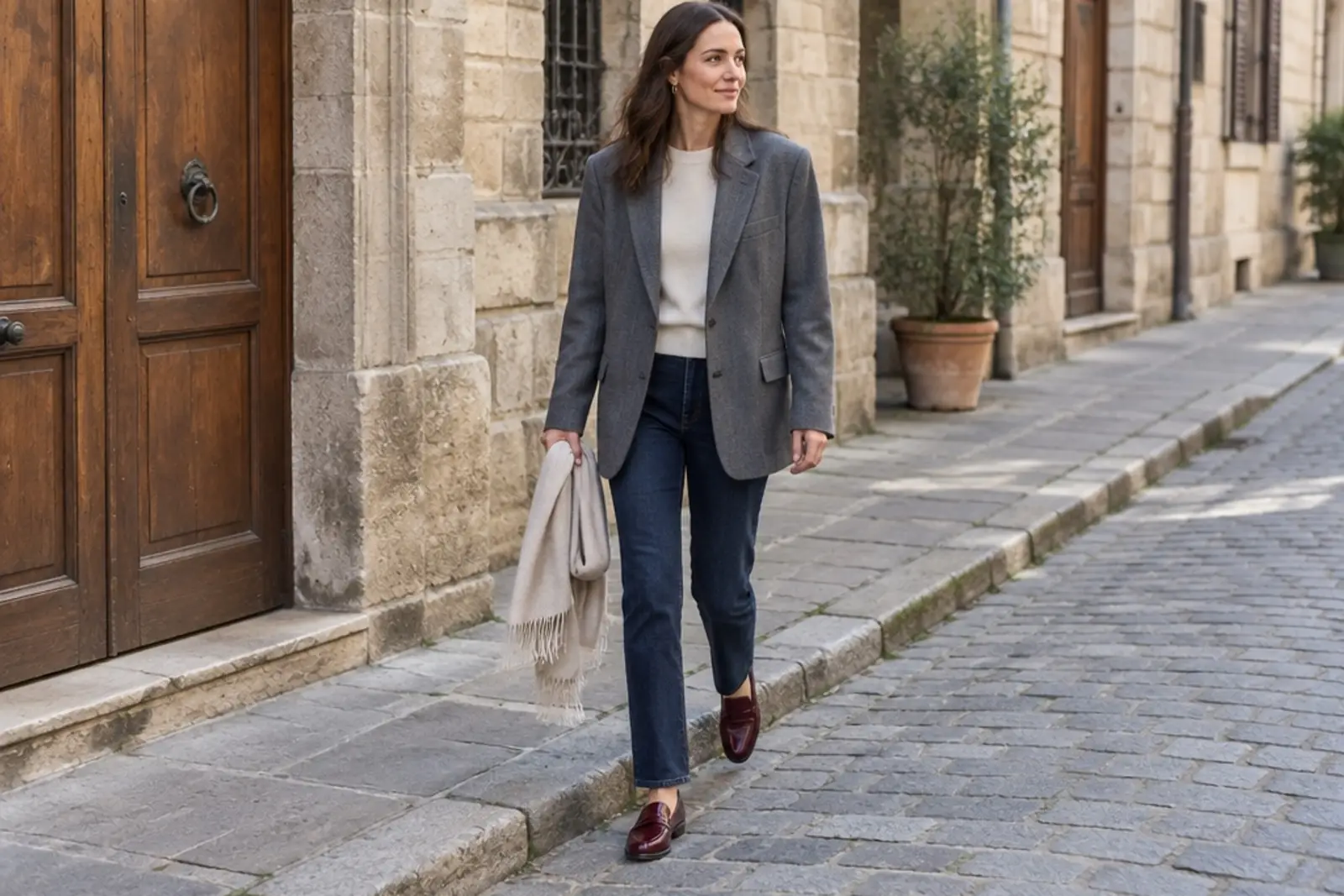
- Scarves are underrated. A scarf adds a surprising amount of warmth, takes no space in a bag and changes the look of an outfit.
Keep the colours friendly
When layers come off and on during the day, every combination is visible at some point. Keep layers within a related palette, for example neutrals with one accent, so the outfit works in every state. Our colour guide has simple formulas.
Check the forecast the night before
The most useful weather check happens the evening before, not at the door. Look at the range: what’s the lowest and highest temperature, and is rain expected? Then plan:
- Big range (cold morning, warm afternoon): light base, removable middle layer, light outer layer.
- Rain later in the day: a water-resistant outer layer and shoes that can handle it.
- Wind: a closed outer layer matters more than a thick sweater.
Shoes and bags
Shoes are the layer people forget. Suede on a rainy day or sandals on a cold evening can ruin an otherwise good plan. A bag big enough to hold a scarf or a folded layer gives you flexibility for the whole day.
If the forecast says about 60°F (16°C), we’ve put rough numbers on each layer in our guide to what to wear in 60 degree weather.
How Amalook helps
Amalook can take the local forecast into account when suggesting outfits, using your approximate location only if you allow it. Combined with the outfit calendar, it means the weather decision is made the evening before, not in a rush at the door.