How to find your undertone, and which tests to trust
Your skin undertone can be warm, cool or neutral. Here's what the vein, sun, jewellery and white fabric tests really show, and a better one for clothes.
Your undertone is the hue beneath your skin tone, usually described as warm, cool or neutral. To find it, hold warm and cool colours beside your face in daylight and compare them. The popular vein and sun tests are much weaker than they sound, and a good result from any test only tells you where to start.
Undertone isn’t the same as skin tone. Skin tone is how light or deep your skin is, while undertone is the hue. As Mented Cosmetics points out, any complexion can be warm, cool or neutral. None of them is better than the others, and there’s nothing here to fix.
What the popular tests really show
We read three beauty brands’ guides: Mented, Maybelline India and Thrive Causemetics. They give much the same tests, and all three brands sell products in undertone shades. We then looked for research that tests these methods against measured skin colour. We didn’t find any, so the ratings below are our own judgement, based on what each test is really looking at.
| Test | How it’s meant to work | Our view | Why |
|---|---|---|---|
| Veins | Blue or purple means cool, green means warm, a mix means neutral | Weak | Vein colour has several causes, and few of them are about undertone |
| Sun | Burning means cool, tanning means warm | Skip it | It’s about your reaction to UV, not your hue |
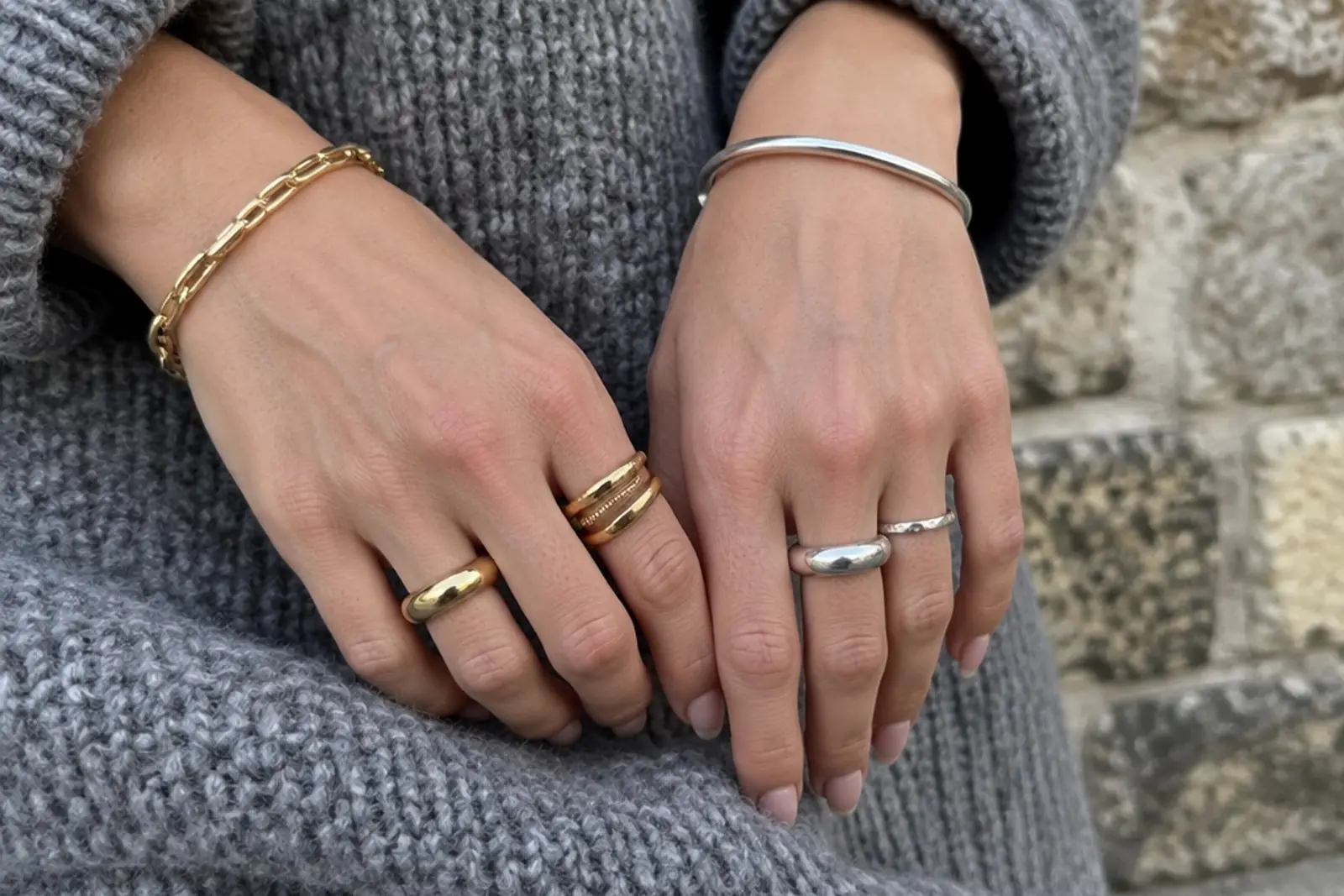
| Jewellery | Gold suits warm, silver suits cool, both suits neutral | Useful, but subjective | It shows what you like beside your skin, which still helps |
| White fabric | Skin looks yellow beside white if warm, pink if cool | Fair | It’s a direct comparison, but it depends on the light |
| Warm and cool colours | Compare pairs of colours beside your face | Best for clothes | It answers the question you’re actually asking |
Why the vein test is weak
Veins aren’t really blue. A 1996 paper in Applied Optics looked at why they appear that way. It found that the colour depends on how skin scatters and absorbs light, how oxygenated the blood is, the diameter and depth of the vessel, and how we perceive colour. Your undertone isn’t a separate reading in that list.
There’s also a practical problem. If your veins are hard to see, or look like both colours at once, the test has nothing to tell you. Maybelline reads “difficulty choosing” as neutral, but it could just as easily mean that the test isn’t working.
Why you should skip the sun test
DermNet describes the Fitzpatrick skin type as a way to classify skin by its reaction to sunlight, and that’s what “do you burn or tan?” comes closest to. It says that reaction depends on melanin. So it’s mostly about how deep your skin is and how it responds to UV. A 2024 review adds that the scale was developed with White patients and that “burn” and “tan” don’t capture how UV affects darker skin.
Please don’t go out in the sun to try this. If you’ve never had a clear result from memory, use another test.
Why you should look at your face, not your wrist
Skin isn’t one colour all over. A 2022 study in Vision Research measured 103 students at four body sites before and after two weeks of sun. The hue angle, the measure closest to undertone that we found, fell significantly on the neck and the back of the hand. It didn’t change significantly on the forehead or cheek.
It’s one small study, and it wasn’t testing undertone as such. But it’s a good reason to judge colours beside your face, which is also where you’ll wear them. Your wrist has had a different life from your cheek.
A better test for choosing clothes
If you’re here because of your wardrobe, you don’t really need a label. You need to know which colours work near your face. This takes about ten minutes, and you can do it with what you own.
- Find daylight. Stand facing a window. Artificial light can shift colours.
- Start with a bare face if you can. Make-up can change how your skin reads. Avoid a strongly coloured top, or cover it with a neutral towel.
- Hold up one pair at a time. Hold each piece under your chin, then swap it for the other in the pair.
- Look at your skin, not the clothes. Does it look even and awake, or do shadows and redness stand out more?
- Take a photo of each one. It’s easier to compare them side by side, and a friend’s opinion can help too.
- Keep score. If warm or cool wins most rounds, that’s your starting point. If it’s close, you may be neutral.
These pairs are our own shorthand. Use whichever ones you have, because near matches work fine.
| Warmer | Cooler |
|---|---|
| Cream or ivory | Bright white |
| Camel or tan | Cool grey |
| Rust or terracotta | Burgundy or berry |
| Mustard | Lemon or icy yellow |
| Olive | Emerald or teal |
| Coral | Fuchsia |
| Gold jewellery | Silver jewellery |

If your result isn’t clear
That’s common, and it isn’t a failed test.
- You might be neutral. Both sides look fine to you, which gives you more colours to wear.
- You might be somewhere in between. Beauty guides sometimes use “olive” for this. Maybelline, for instance, lists olive-based foundations under warm undertones, so you may see it described in different ways.
- The light might be the problem. Try again at another time of day, by another window.
- Your skin may be deeper than the guide assumes. Skip the vein and sun tests and rely on colour pairs, which don’t need you to see through your skin.
For make-up, try the actual shade in daylight, since a brand’s “warm” shade may not match another brand’s.
How to use your undertone when you dress
Treat it as a starting point rather than a rule. Your favourite colour can still be yours, whatever a test says.
- Keep your best colours near your face. Tops, scarves and collars matter the most here.
- Wear the others further away. A colour that doesn’t flatter you under your chin can be great as trousers, shoes or a bag.
- Use a layer to bridge the gap. A scarf or shirt in a colour you like can sit between your face and a jumper you don’t want to give up.
- Look at what you already reach for. You’ll probably find you’ve been choosing your colours for years.
For putting those colours together, see our guide to colour combinations that work. If you’d like to go further, there’s more in finding your personal style.

See the colours you really wear
The quickest check is often your own wardrobe. When you know which colours you reach for most, you can test those first. That’s part of what we’d like Amalook to show you once it’s out, through colour insights from photos of your own clothes. For now, lay your favourite tops on the bed and look at what they have in common.
Common questions
What's the difference between skin tone and undertone?
Skin tone is how light or deep your skin is. Undertone is the hue beneath it, usually described as warm, cool or neutral. Any skin tone can have any undertone.
Is the vein test accurate?
We found no study that tests it against measured undertone. Research on vein colour points to skin optics, blood oxygenation, vessel size and depth, and how we perceive colour, so it's a weak guide at best.
How do you find your undertone if you have dark skin?
Skip the vein and sun tests, since veins can be harder to see and the sun scale wasn't built with deeper skin in mind. Hold warm and cool colours beside your face in daylight and compare how your skin looks with each. Any complexion can be warm, cool or neutral.
Can your undertone change?
Beauty brands usually say it can't. We haven't found a study that settles this. One study did find that the measured hue of skin changed on the neck and hand after two weeks of sun, but not on the face.
Sources
Checked on 5 November 2026. Listings change, so check them again before you decide.
- Kienle et al.: why do veins appear blue? A new look at an old question (Applied Optics, 1996)
- Jiang et al.: skin color measurements before and after two weeks of sun exposure (Vision Research, 2022)
- DermNet: skin phototype (Fitzpatrick skin type)
- Considerations for the use of Fitzpatrick skin type in plastic surgery research (2024)
- Mented Cosmetics: how to find your undertone
- Maybelline India: how to know your skin undertone
- Thrive Causemetics: how to tell your skin undertone